
The Hastings City Council read a proclamation during Monday’s meeting, declaring August 21 as National Fentanyl Prevention and Awareness Day.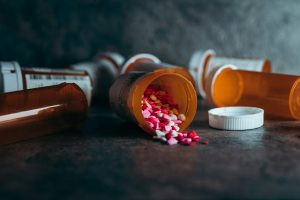
In recognition of the day, KDWA spoke with Dakota County Sheriff Joe Leko about substance use, the impact of fentanyl in Dakota County, and resources available to those seeking help from addiction.
Sheriff Leko shares the latest overdose statistics for Dakota County.
“Well, we receive reports from the department, the Minnesota Department of Health, and a lot of times those statistics are behind because they’re still gathering from the previous year. But what I can say for 2025 in Dakota County specifically, we had over 1,200 suspected overdoses. So that’s about three a day in our county. Those aren’t all deaths, but 24 of those are fatalities. So that’s once every two weeks somebody is dying and being reported to have died from an overdose, and when we give those statistics, we want to make sure that people understand that that is on the low end because not every overdose is reported to law enforcement or emergency services or the hospitals. So, we are continuing to see overdoses, and when you see 1,200 in a year, which has leveled off somewhat. There was a there was a big spike back in 2024, but it has reduced. But that reduction has since leveled off. So, we continue to see overdoses, unfortunately, in Dakota County and in general the metro area at alarming rates.”
Addiction can affect anyone, regardless of age or background.
“Generally, we’re seeing overdoses anywhere from the teenage years to, you know, 16 to 40 years old is roughly the group that we’re seeing that is overdosing. Can it happen with those outside the age group? Absolutely. The majority of the overdoses that we’re seeing are those in that younger age group, up to age 40, with probably the average mean in the late 20s, early 30s.”
Fentanyl continues to be a concern in Dakota County. Sheriff Leko also discusses a newer form of fentanyl that residents should be aware of.
“Well, I think what we need to be concerned about is fentanyl, which was two years ago we were seeing more in a pill form, in the form of counterfeit drugs, where they look like those that you might be getting through a prescription, whether it’s oxycontin or any of the opioids that might be distributed through a pharmacy, they look very similar to that. Now we’re seeing it come up here in a powder form, which is even more dangerous because that can then be in any type of drug; it could be in methamphetamine, cocaine, even marijuana, or any other illicit drugs. It could be contained, and we’re finding that out with our drug task force when they’re seizing other drugs aside from just fentanyl, straight fentanyl. They’re finding it incorporated in other drugs as well. So, if you’re addicted to methamphetamine, there is a good chance that there is also fentanyl in there, and it could be deadly. So, whereas when it was in the pill form, those who were taking it in that form were probably aware that that’s what was in there. But with that said, there’s also people that are buying pills thinking they were out of a prescription pill bottle, like an oxycontin, not knowing that there’s fentanyl in there, and this is from the black market, and that’s what’s and the potency is much higher, and that’s what’s taking lives.”
So where are these drugs entering Dakota County from? Sheriff Leko explains the current source as well as where the drugs have come from in the past.
“The source is primarily Mexico. You know, if not all of it is coming from Mexico, and I know that there’s been some questions in the community: Are we seeing meth labs? Are we seeing any manufacturing of these drugs locally within the United States? We are not like we were back in the mid-2000s, where we had meth labs that were popping up all over the United States, especially here in the metro, within rural Dakota County, where they were making their own methamphetamine at that time. When the state restricted pseudoephedrine over the counter, where it now requires an identification, and then increased the penalties for meth labs, that really stopped that production. But what we’re seeing is the drugs that are made down in Mexico, and the super labs is what we call them. They are high potency, high toxicity, and they’re being shipped up here through different means. And I know that we, you know, there’s talk about closing the border and things like that. But they still find other means to get it up here because there’s such a demand, and it’s such a money-making business for the cartels. So, they find their way, whether it’s through, you know, the mail system, whether it’s through other carriers to come through trucking companies hiding them in flatbeds with loaded with cars and tires; they find all different types of means. This is not the probably stereotypical view that might think that they’re sneaking across the border by foot with those from Mexico. They find ways to get in through other means because it’s such a highly profitable business. So, we are continuing to see the high number of fentanyl up here, and like I said, it’s more of a powder form, and we’re seizing a lot of it on our street with our collaborative drug task force. They’re busy.”
Sheriff Leko explains the warning signs of an overdose and what opioids do to the body.
“Typically, the person cannot be awakened. They’re either unconscious or unresponsive. They have very slow or shallow or stop breathing. They have purple or blue lips, as you would imagine, or fingernails, you would imagine, you know, with poor circulation, cold or clammy, or a slow or absent pulse. So, they’re generally unresponsive, and sometimes you’ll use that sternum rub, or you’re trying to shake them to wake them up, and they’re just going to be unresponsive with that shallow breathing. So that can be any type of medical condition that can mimic that same sort of thing, whether it’s a heart issue or stroke or something else that could also mimic that same thing. But it’s critical to get that person to help immediately, as with any other medical that happens. But specifically, when you suspect that, you can administer Naloxone, or Narcan is the brand name, if you have it. We’ve had many saves with that, either in our jail or on the in the community, and that is widely available out there now. And if you can do that, it reverses the effect. It basically stops the effect of the opioid in the body, and that person can almost immediately wake up and reverse those, the trends, that are that are happening in the body, the medical the body’s reaction to that, to bring them out of that. Because an opioid and fentanyl, what it does is slow everything down in your body. It’s a depressant. It’s a pain reliever, and if you, obviously, if you take too much of it, you can overdose, and your body can shut down. So, we want to get to them as soon as we can when you observe those physical warning signs.”
For those struggling with addiction and seeking help, Sheriff Leko offers guidance on where to turn.
“You know, sometimes you don’t know where to go, and we got to make sure that we
understand that there is help out there. There is treatment and recovery for those that may have an addiction, because we know that’s why this business is so for the those that are delivering the drugs and selling the drugs is so profitable because it’s highly addictive, and you want to come off of it, but your body won’t allow you to. It’s like any other chemical that you might be addicted to, whether it’s even nicotine. There is help to obtain a chemical health assessment and connect people to resources and treatment. The county’s behavioral health fund can help residents pay for an assessment and treatment when insurance doesn’t cover that. There’s a chemical health intake number—it’s 651-554-6424. The county also provides an online substance use treatment map, identifying chemical providers, withdrawal management services. Like I mentioned, the free Naloxone or Narcan locations for those that may need that nearby. With that said, I want to make sure that that’s not a foolproof safety net. If you have naloxone handy, that that’s your permission to use, and you’ll be saved if you go down. Sometimes that doesn’t work, especially with this more high high potent drugs that we have. And for anybody experiencing an immediate behavior health crisis, and they may feel like they need some help with their addiction, or they just took it and they don’t feel well, or whatever it is. There’s a crisis response unit that’s available in the county. You can either just dial 988 by call or text. That’s the easiest way: 988. I think many people have seen that out there, or just 911, and you can have first responders come out there and help assist you, get you through that initial, you know, medical need, and then we can connect you and follow up with resources. And most importantly, it’s talking with your kids, it’s talking with your family, your friends, and ask for help because there should be no shame if you are addicted to these drugs. There’s 1000s and 1000s of people that are unfortunately, and it’s not a judgment on you as a person. You need help. It’s…you have people out here that are able to help, and we want to connect you to those. So don’t be afraid to have those connections, not just with the warning signs with your children, because they’re seeing it in the schools. They will; they know more about it than the parents do, and that’s not a good thing. So, the parents, super, you know, the parents and the faculty and the teachers and us in law enforcement have a responsibility to educate our youth of the dangers of these drugs as well. But those open communications about this is where it starts, and I think we’re making some strides in there.”
Sheriff Leko says addiction is a public health concern and has an important message for folks to keep in mind.
“You know, addiction is a is a public health and public safety issue that touches families throughout Dakota County. There’s the stereotypical, “these are drug addicts and they should know better.” That narrative needs to stop. We’ve had youth lose their lives because they’ve experimented with drugs, not knowing that it had fentanyl or these deadly chemicals within that they were taking. Right? So, they’re not trying to kill themselves, and it can reach anybody from teenage years who are experiencing you know experimenting with drugs to those that are multi-year or decade-long addicts. So, we just need to make sure that we remove that stereotype with people that are that are users and addicted and make sure that we’re reaching out to them and understand that this is an addiction. It’s not always a choice, and we have to have support around them. It’s more than law enforcement. We’re not going to arrest our way around this, and we’re not going to close the border and avoid this coming into our country. It’s here, so we have to deal with it on a collaborative way with not just enforcement, but also the education, the prevention, and the treatment and recovery side of it. So, it takes all stakeholders to do this, and we’re proud of the work we do here. But we also know there’s a lot of work to do.”
Links mentioned in this report can be found on KDWA.com.
[Click the soundbite to listen to the report]