
Minnesota motorists are adjusting to a new law allowing motorcycle lane filtering and lane splitting in certain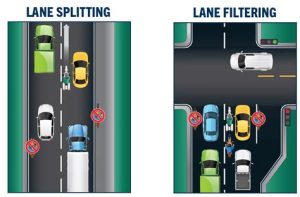 situations.
As part of this week’s conversation with KDWA, Deputy Chief Bryan Schowalter discussed what both motorcyclists and other drivers need to know about the new law—and some basic safety reminders for sharing the road.
Motorcycles can be more difficult to see on the road, and Schowalter says one of the biggest safety issues comes down to drivers failing to check their blind spots before changing lanes.
“So, you know, when it comes to motorcycles, I would say the biggest thing to keep in mind is it’s just driver safety for non-motorcyclists. The biggest piece is just checking your blind spots, taking an extra moment before you change lanes…”
Schowalter says motorcycle riders also have a responsibility to drive safely, pointing to speeding, abrupt lane changes and weaving through traffic as common concerns.
“I think all of us could say at some point in time we’ve witnessed a motorcyclist either driving excessively or slalom coursing through traffic, abrupt lane changes, and just making urgent or swift moves. So the biggest thing is slow down, be patient, and then just watch the roadway as you’re navigating these.”
And when a motorcycle is involved in a crash, the consequences can be much more serious because riders don’t have the protection of a passenger vehicle.
Minnesota’s new lane-splitting law took effect July 1. Schowalter says the change brings Minnesota more in line with several other states.
Lane splitting allows a motorcycle to travel between two vehicles moving in the same direction. But there are limits.
“As far as lane splitting goes, 25 miles an hour is the maximum speed you’re allowed to be traveling when lane splitting and also no more than 15 miles over the speed of existing traffic.”
Schowalter says there are also specific situations where lane splitting is not allowed.
“You cannot lane split when you are entering in or exiting a roundabout. You also cannot lane split while you are in a school zone or a work zone, and then also the last time is you can’t lane split while you’re either exiting or entering a highway.”
That includes highway on-ramps and off-ramps.
Schowalter says the change could take some getting used to for Minnesota drivers. He encourages motorists to understand the law before assuming a motorcycle traveling between lanes is breaking the rules.
“So, it’ll be a change for everybody, but we’re becoming more in line with some other states, and once it becomes more common practice, it won’t be as shocking to motorists when they see it take place.”
Schowalter says anyone looking for the exact language of Minnesota’s motorcycle lane-splitting and filtering laws should consult the Minnesota Office of the Revisor of Statutes.
“You know, the best place to check on any state statute or any laws that exist in Minnesota, whether they be rules or statutes, the best place is to go to the Office of the Revisor website… So, the Office of the Revisor for the state of Minnesota is the best place to get that information.”
For more information, links mentioned in this report can be found at KDWA dot com.
And if you have a question for Deputy Police Chief Bryan Schowalter, you can email the KDWA news department at news at KDWA.com.
[Click the soundbite to listen to the report.]